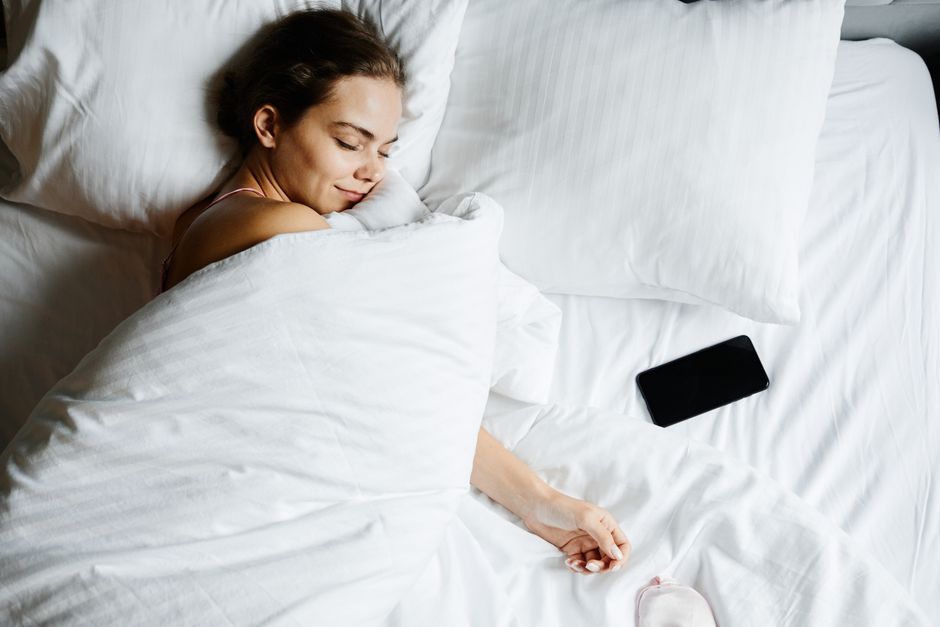
Comparison · 3 picks
Best Cooling Mattress Topper UK (2026)
Affiliate disclosure: This article contains affiliate links. If you click through and buy a product we will earn a small commission at no extra charge to you. As an Amazon Associate I earn from qualifying purchases.
A cooling mattress topper is the cheapest way to take the edge off a bed that sleeps hot - but the honest headline matters: a topper cannot beat the physics of the mattress and room beneath it. It makes a heat-trapping bed less hot; it does not chill you. What it is made of decides how much difference it makes.
We compared three UK-available picks that map to how hot you actually sleep. Prices move, so check the current price on each link; some links are affiliate links that never change our ranking.
At a glance
All 3 options side by side.
| Simba Cool Foam Mattress Topper | Vesgantti 4-Inch Gel & Bamboo Charcoal Topper | Silentnight Wellbeing Cool Touch Topper | |
|---|---|---|---|
| Price | See price | See price | See price |
| Cooling tech | Open-cell Simbatex foam (high airflow) | Gel + bamboo-charcoal infused foam | Coolmax cool-touch cover |
| Depth | 6.5cm | 10cm | 8cm |
| Best for | Serious hot sleepers | Value / re-topping + mild-moderate warmth | Mildly warm sleepers |
| Cover | Knitted, washable | Washable | Coolmax, washable |
| Review | Read review → | Read review → | Read review → |
| Buy |
The picks in detail
Simba Cool Foam Mattress Topper
Bottom line. Best for serious hot sleepers: open-cell Simbatex foam moves far more air than gel-in-memory-foam, the genuine step-change.
Pros
- Simbatex open-cell foam moves far more air than memory foam
- Responsive peaked base keeps air flowing
- Knitted, machine-washable cover
- The strongest cooling pick here for serious hot sleepers
Cons
- Premium price
- 6.5cm depth adds less comfort than a thick budget topper
- Still a topper - it cannot beat the mattress and room beneath it
Vesgantti 4-Inch Gel & Bamboo Charcoal Topper
Bottom line. Best value: a thick gel and bamboo-charcoal topper that also re-tops a tired mattress, for mild-to-moderate hot sleepers.
Pros
- Gel plus bamboo-charcoal infused foam helps disperse heat
- Thick 10cm depth re-tops a tired mattress
- Washable cover
- Strong value for the depth
Cons
- 10cm depth adds some heat retention (depth trades off against cooling)
- Gel-in-memory-foam is milder than an open-cell build
- A step below a genuine step-change topper for serious hot sleepers
Silentnight Wellbeing Cool Touch Topper
Bottom line. Best for mild warmth: a cool-touch Coolmax cover treats the surface, though the memory-foam core still hugs.
Pros
- Coolmax cover feels cool to the touch and wicks moisture
- 8cm depth adds noticeable comfort
- Machine-washable cover
- Widely available and keenly priced
Cons
- Memory-foam core still hugs and retains some heat
- A cool cover treats the surface, not the whole bed
- Better for mild warmth than for serious hot sleepers
How did we choose these toppers?
Every pick is readily buyable in the UK and chosen to cover a different level of need, from a mildly warm sleeper to someone already let down by gel foam. We weighted the cooling mechanism first (what actually moves heat), then depth and value. Verdicts draw on material science and aggregated owner reviews, not first-hand testing - this is an editorial comparison, not a lab test.
What actually makes a mattress topper cool?
Plain memory foam is the worst offender for heat: it softens with body warmth and hugs, trapping it. A cooling topper counteracts that in one of two ways. Conductive fillers - gel beads, copper or graphite - absorb and spread heat rather than letting it pool. An open-cell structure lets air move through the foam so heat does not build up. Open-cell foam like Simba's Simbatex tends to out-cool gel-in-memory-foam, which in turn beats a cover alone.
Bamboo covers are the common confusion: they are breathable and temperature-regulating, which fixes a mildly stuffy bed, but they do not actively cool a serious hot sleeper. Keep the two ideas separate when you buy.
Which cooling topper materials work best?
Every cooling mattress topper leans on one of six builds, and they behave very differently once you have been lying on them for an hour.
- Open-cell foam (foam with an interconnected cell structure that air can pass through) is the strongest passive option. Heat escapes instead of pooling under you, which is why it tops our list.
- Cooling gel mattress toppers mix gel beads or swirls into memory foam. The gel slows how fast the surface warms, so the first part of the night feels cooler, but it absorbs heat until it saturates and then holds it. Good for mild warmth, disappointing for a serious hot sleeper.
- Latex has an open, springy structure. According to the Sleep Foundation, it is naturally breathable and retains less heat than adaptive memory foams.
- Wool toppers work on moisture rather than air: wool wicks sweat away from the skin and buffers temperature, which suits sleepers who wake damp rather than just warm.
- phase-change material (PCM, sold under names such as Outlast) is microencapsulated into the fibres of a cover. It absorbs heat as you warm and releases it as you cool, smoothing out temperature swings rather than chilling the bed.
- Cooling hybrid mattress toppers stack two of these, usually a foam core under a cool-touch, bamboo or PCM cover. A hybrid is only as cool as its core, so check which foam sits underneath before paying for the cover.
Thickness matters too. Sleep Foundation notes that cooling toppers usually run 2 to 4 inches (about 5 to 10cm), and our three picks sit inside that range at 6.5cm, 8cm and 10cm.
Does a cooling mattress topper improve sleep?
The evidence says heat is worth tackling. According to a review in the Journal of Physiological Anthropology, warmth in a real bed, with bedding and nightwear, increases wakefulness and cuts both slow-wave (deep) and REM sleep, and humid heat makes that worse. The same review puts the bed microclimate, the pocket of air between you and the covers, at around 32 to 34°C, and notes it stays fairly steady even when the room changes. The surface you lie on is where heat builds up, which is exactly the layer a topper changes.
There is now direct evidence for toppers themselves. A Loughborough University-led study of 17 adults, published in Building and Environment in May 2026, held a test bedroom at 30°C and found a cooling mattress topper added an average of 19 minutes of total sleep and cut the time taken to fall asleep by 10 minutes compared with regular bedding. The university presents it as a low-energy alternative where air conditioning is not an option. Its press release does not say whether the topper was powered or passive, so read it as proof that the bed surface matters rather than as a result for any one product here.
A cooler room still does the most work: our guide to the best bedroom temperature for sleep sets the target, and the topper helps you hold onto it.
How do the picks compare?
Can a topper really cool you down?
Only so far, and it is fairer to say it stops your bed making you hotter. The mattress and the room beneath the topper still drive most of your temperature, so pair a topper with the basics: a cooler room, breathable bedding and airflow. Our guide on how to make a bedroom cooler for sleep covers the rest of the picture, and a cooling pillow handles the part of you that runs hottest.
Depth is the other trade-off: a thick 10cm topper adds comfort and re-tops a tired mattress, but more foam also holds more heat, so the deepest topper is not automatically the coolest.
Which cooling topper is right for how hot you sleep?
If you run seriously hot and gel foam has already let you down, the Simba Cool Foam and its open-cell structure is the genuine step-change. If you want the best value and also want to revive a tired mattress, the Vesgantti gel and bamboo-charcoal topper does both for mild-to-moderate warmth. If your bed is only a little stuffy, the Silentnight Cool Touch cover is enough and the cheapest way to feel cooler on contact.
Do cooling toppers help with menopausal night sweats?
Partly, and it is worth being precise about which part. A night sweat during the menopause or perimenopause is driven by how the body is regulating its own temperature, not by the bed. A topper cannot touch that. What it can do is remove one thing that makes the episode worse: a mattress that has been storing your body heat all night and has nowhere to put it. If you wake already too hot, cooling the surface you are lying on is a real improvement, but it is a smaller lever than the room.
The NHS lists keeping your bedroom cool at night and wearing lightweight clothing among the things that help with hot flushes and night sweats, alongside a cool shower, a fan or a cold drink, and cutting down on known triggers including spicy food, caffeine, hot drinks, smoking and alcohol. Treat a topper as one part of that, not a substitute for it, and speak to a GP about symptoms and treatment options.
If night sweats are the reason you are shopping, two things matter more than the headline cooling claim. Favour a topper that moves air over one that relies on a gel layer, because gel-in-memory-foam absorbs heat until it is saturated and then holds it, which is precisely the wrong behaviour at three in the morning. And make the layers above you sheddable: separate sheets and a lighter duvet (our summer tog guide covers which) let you dump heat mid-episode in a way a single heavy duvet does not.
Frequently asked questions
Do cooling mattress toppers actually work?
What is the best type of cooling mattress topper?
Does a thicker topper sleep cooler?
Are cooling gel mattress toppers worth it?
What is a cooling hybrid mattress topper?
How thick should a cooling mattress topper be?
Is a cooling topper better than a cooling pillow?
Which cooling mattress topper is best for menopause night sweats?
Best Cooling Pillow UK (2026)

How to Make a Bedroom Cooler for Sleep
Best Bedroom Temperature for Sleep
What Tog Duvet for Summer?
Also sleep hot on your pillow?
A cooling topper handles the bed; pair it with a cooling pillow for the part of you that runs hottest.